
How it works
Yarn in one end.Cloth you cancut at the other.
Nothing in this sequence is exotic. What matters is that every step happens in order, that the checks are real, and that you can be told exactly where your order sits at any point.
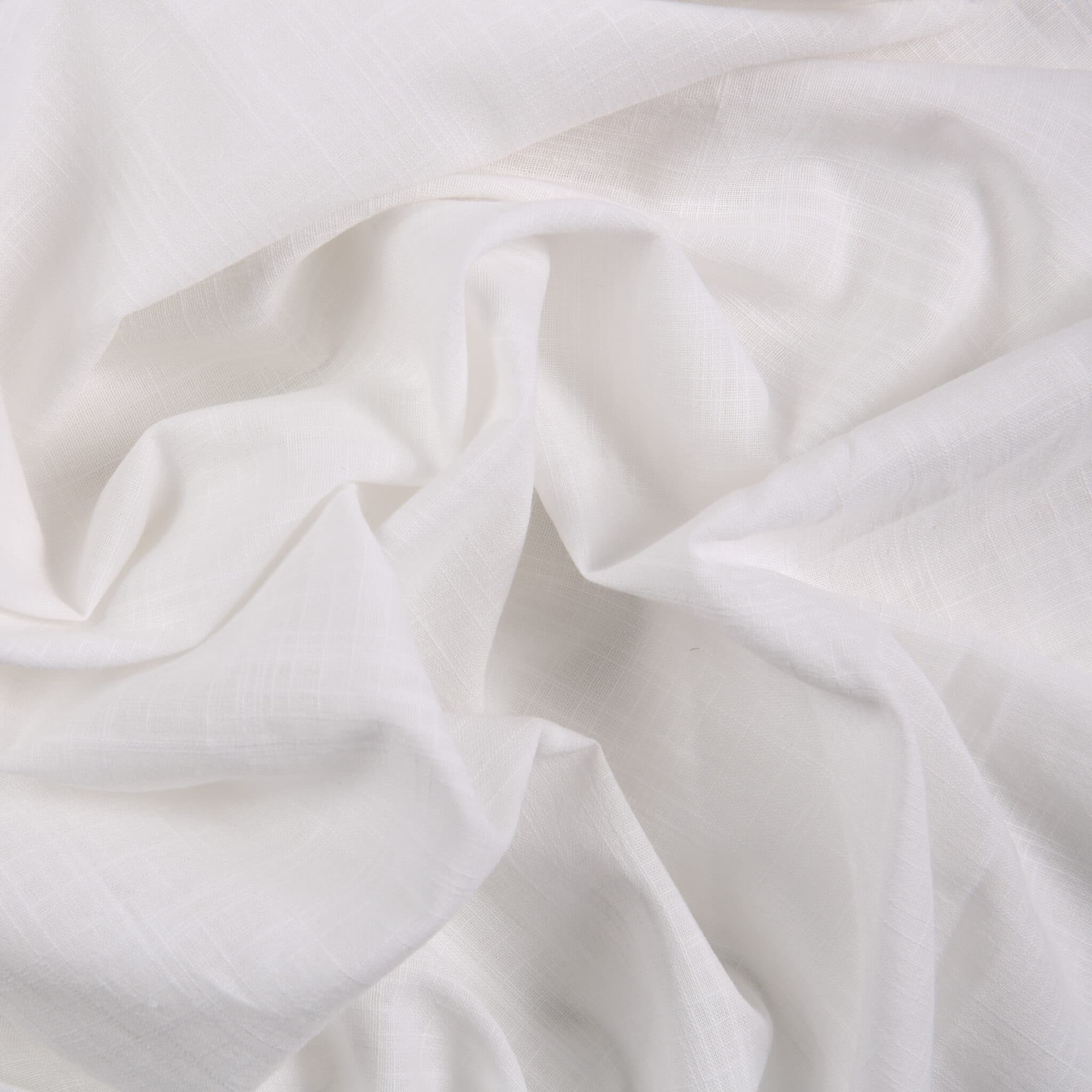 Before — greige
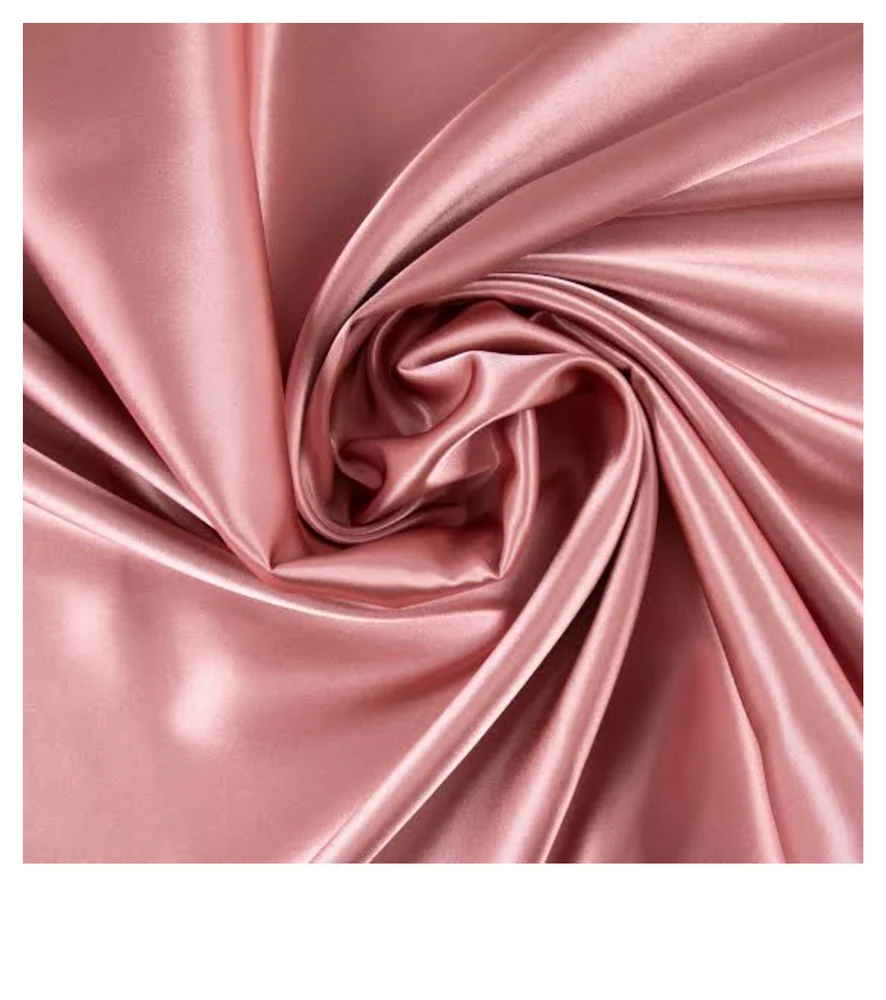 After — dyed & finished
Step by step
Eight stages,start todispatch.
A raw order finishes at step three. A dyed order runs the full eight.
Yarn and sourcing
Every quality starts with a yarn specification — denier, filament, twist. We buy to that spec rather than to whatever is cheapest that week, because it is the only way a repeat order looks like the first one.
- Denier and twist locked
- Approved spinners
- Lot traceability
Weaving and knitting
Cloth is produced to the construction sheet for that quality — picks, ends, width and weight. Looms are set once and monitored, so width and GSM hold across the length of the run.
- Construction sheet
- Width control
- GSM monitoring
Greige inspection
Loom-state fabric is checked on a light table for weave faults, oil marks and shading, then measured, folded and rolled. This is where a raw order is finished — and where a dyeing order is cleared to continue.
- 4-point style inspection
- Width and weight recorded
- Roll-wise tagging
Preparation
Before any colour goes on, the cloth is desized, scoured and heat-set. Skip this and the shade will not be level — most dyeing complaints are actually preparation complaints.
- Desizing
- Scouring
- Heat setting
Lab dip and approval
Send a swatch, a Pantone reference or a previous lot. We produce a lab dip against it, check it under the light source you sell in, and only start bulk once you have signed the dip off.
- Physical or Pantone match
- Multi-light assessment
- Written sign-off
Bulk dyeing
Bulk is dyed against the approved dip in one lot wherever quantity allows, so there is no shade break in the middle of your cutting table. Where a lot has to be split, the pieces are tagged and continuity-checked.
- Single-lot where possible
- Continuity cards
- Reactive / disperse / acid
Finishing
Finishing decides the hand. Soft, dry, crisp, or a specific fall — tell us what the garment needs and the finish is set to that rather than to a house default.
- Hand-feel to brief
- Calendering
- Width setting
Quality control and dispatch
Final inspection covers shade against the approved dip, wash and rub fastness, width, weight and visible faults. Goods are packed roll-wise with a report and dispatched.
- Fastness checks
- Shade continuity
- Roll-wise packing list
Capabilities
What we cantake on.
If something here is not a fit for your order, we will say so rather than take the job and hope.
- 01
Raw greige supply
Loom-state cloth in commercial quantities, inspected and documented, ready to enter your own process.
- 02
Piece dyeing
Reactive, disperse and acid dyeing across polyester, viscose, modal, cotton, nylon and blends.
- 03
Shade matching
Lab dips against a physical swatch, a Pantone reference or a lot you ran two seasons ago.
- 04
Finishing to brief
Hand feel set to what the garment needs — soft, dry, crisp — rather than to a single house finish.
- 05
Repeat programmes
Construction sheets and approved dips are kept on file so a repeat order matches the original.
- 06
Export documentation
Roll-wise packing lists, inspection reports and fastness results supplied with every dispatch.
Questions
Answeredbefore youask.
Raw fabric — greige, grey or loom-state — is cloth as it comes off the loom: undyed, unprinted and unfinished. RFD stands for ready for dyeing: raw cloth that has been inspected, measured and cleared to go straight into your own dyeing or printing programme. Everything we supply is in this raw state; the dyeing, printing and finishing are yours.
We sell raw RFD fabric only. Every quality in our catalogue is supplied undyed, in loom state, for your own dyeing, printing or finishing. If you want a construction delivered in colour, take our greige to your dye house — the construction sheet we send with every roll tells them exactly what they are working with.
Loom settings are held to the construction sheet — ends, picks, yarn count and width — so a repeat order behaves like the last one in your dye bath. If you are matching against a previous lot, tell us which one and we will check it against the sheet before we confirm.
It depends on the quality and the width. Tell us the quality and the total metreage and we will give you the honest minimum rather than a headline number.
Yes. Swatch sets of any qualities you are considering can be sent so you can judge hand feel, weight and drape yourself. Ask for the specific qualities, or tell us the end use and we will suggest a set.
Yes. Export orders are supplied with roll-wise packing lists and inspection reports. Tell us the destination and the incoterms you work on and we will quote accordingly.
Every roll is inspected on a light table for weave faults, oil marks and shading, then measured for width and weight and tagged roll-wise. The inspection report travels with the goods, so your dye house knows what it is receiving before the first bath.
Ready when you are
Put the process to work on your order.
Send the quality, the shade and the quantity. We will confirm what is possible, what it costs and how long it takes.